Will the PicoCalc ever get discontinued? 
A estimate of units sold so far by me might be somewhere between a few thousand to perhaps 10‑20,000 units globally,.
Of course it will be discontinued someday. Ever is a very open-ended word. Everything ends eventually. I wouldn’t worry about it, though. Enjoy it while you have it. Don’t deny yourself the pleasure of using it while you wait for “The Next Big Thing” Someday, we’ll look back and laugh, “Did we really make do with only x GB ram and a y GHz processor? How quaint!” Remember, to those of us who lived through the ‘60s and ‘70s, 1K to 16K RAM and a 1MHz or 2MHz processor was all we had and we loved it!
3 Likes
Given the lead-time it takes to get one, I would be very surprised if there were, optimisticly, more then a few thousand at best.
The PicoCalc is a rather better made small production run specialty device. Over the years I’ve bought dozens of these sort of gadgets, and they’ve generally have a fairly limited window of availability, so you get them while you can. Because when they’re gone, they’re gone… which is why I bought 2!
It doesn’t however, make them any less significant. I have old computers from the last 50 years, all of which long discontinued, but that continue to have vibrant, active communities behind them.
The PicoCalc is unique because it essentially just a custom PicoMite in a handheld enclosure. The hardware is inexpensive and plentiful, the software is varied, and it’s rather easier to build. I’m current building 2 LCD versions, I will be making the VGA and HDMI ones, and I’m gathering the parts of my own modular hand held.
3 Likes
That sounds very interesting. Can you provide any details?
1 Like

I’ve made several wiring boards for the first two and im waiting for the enclosures. The LCD panels are 4" & 7".
I wanted them to be generic enough so I can easily change and upgrade them. I have 18650 battery charging modules comming so and I’m looking as PS2 and I2C keyboard options.
1 Like
There’s nothings particularly difficult about building Picomites. For the very basic LCD panel builds, you don’t really need the breadboard, and you can wire it up directly. I do it for convenience and flexibility.
Keyboard wise, these are going to initially use PS2. I’m not entirely happy with what’s available for I2C, so im looking at what i can get, and whether i feel like putting in the effort to build either a custom mini PS2 or I2C keyboard.
With the 7" LCD, I’d like to ultimately make something like the old TRS Model 100.
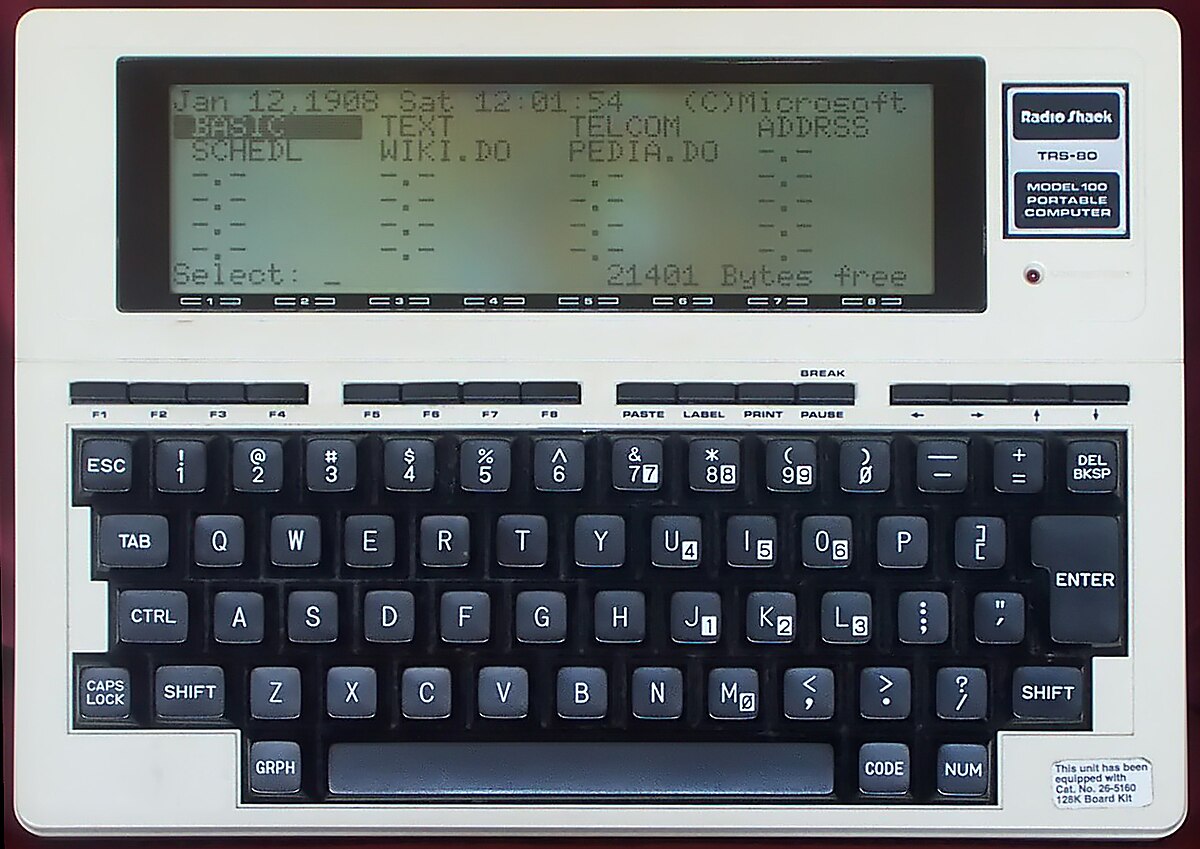
3 Likes
That was why I was disappointed in the DevTerm. What I was hoping for was a TRS-80 Model 100 - with the full-sized keyboard and modern insides. But what was produced was a device that was too large for thumb-typing and too small for touch typing.
1 Like
So far, in building a portable, the hardest part has been finding the right keyboard. The simplest solution is PS/2, they’ve still widely availability new (I have tons them), but there isn’t a lot of choices of sizes of keyswitch types. I have some older, 1/2 - 3/4 scale, mini keyboards that I’ve been saving, but they don’t support PS/2, and the closest is PS/2 find is a 12" compact. As there was talk that some gamers preferred PS/2 over USB keyboards because they have less input lag, I was hoping to get luckily and find a 60% mechanical, but no luck so far.
Using the USB build of PicoMite would give me a ton of options, but would be a bit bigger nuisance to power, configure and update.
I2C is possible, but everything I’ve seen is about the same size as the Picomite’s keyboard, and I really don’t want to get stuck having to debugging and correcting it’s code.
One option I’ve been considering is either getting a PS/2 encoder IC, or salvaging one from an old keyboard, and building a custom one. Whether I mod a cheap 60% mechanical, or design a whole new board, it going to be a lot of work.
Have you seen: Miniature Keyboard- Microcontroller-Friendly PS/2 and USB : ID 857 : Adafruit Industries, Unique & fun DIY electronics and kits for a ps2 kbd?
I’d seen mini keyboards like that, and it’s an option, but I was hoping to find a PS/2 compatible 60% mechanical. Unfortunately, they don’t apparently exist any more. Ironically, the easiest, and cheapest, way to make one is to used Pico as a USB to PS2 adapter.
For a purely MMBASIC build, the best solution is to use the USB build, but it’s something Ive yet to play with
Oh, incase anyone’s interested, here a link to the Pico based active USB to PS/2 converter: