 i agree that you definitely give the jumper a good talking to before it would work…
I Just Noticed On The Picture At The top Of the Thread 
I Already Remove the battery holder. now need to revert the power cable, as they won’t fit right (as red will be connected to the negative part, base on what’s written on the pCB
Does the AIO v2 work with Radxa CM5? I know the v1 doesn’t work, even with your adapter module. Thanks for your work!
Odd. The linked post says it may.
And just your luck, support might actually come true. But we’re talking uncharted territory here, based on the lack of content about either AIO modules running with the Radxa CM5. Might I suggest looking into Radxa’s documentation of the GPIO software?
Maybe keep your eyes peeled for updates on @jutleys dedicated topic, yeah?
Everything working like a charm 

Do you mean the radxa CM5 is yes can you show us your setup


The reason why V1 not working with the Radxa, is that the GPS output will mess up the uboot. Since the GPS on V2 is power off by default, so it won’t mess up the uboot.
2 Likes
Do I have V1 or V2?…
V2 I imagine judging from your pictures, it should also tell you on your order slip
it’s also printed on the PCB


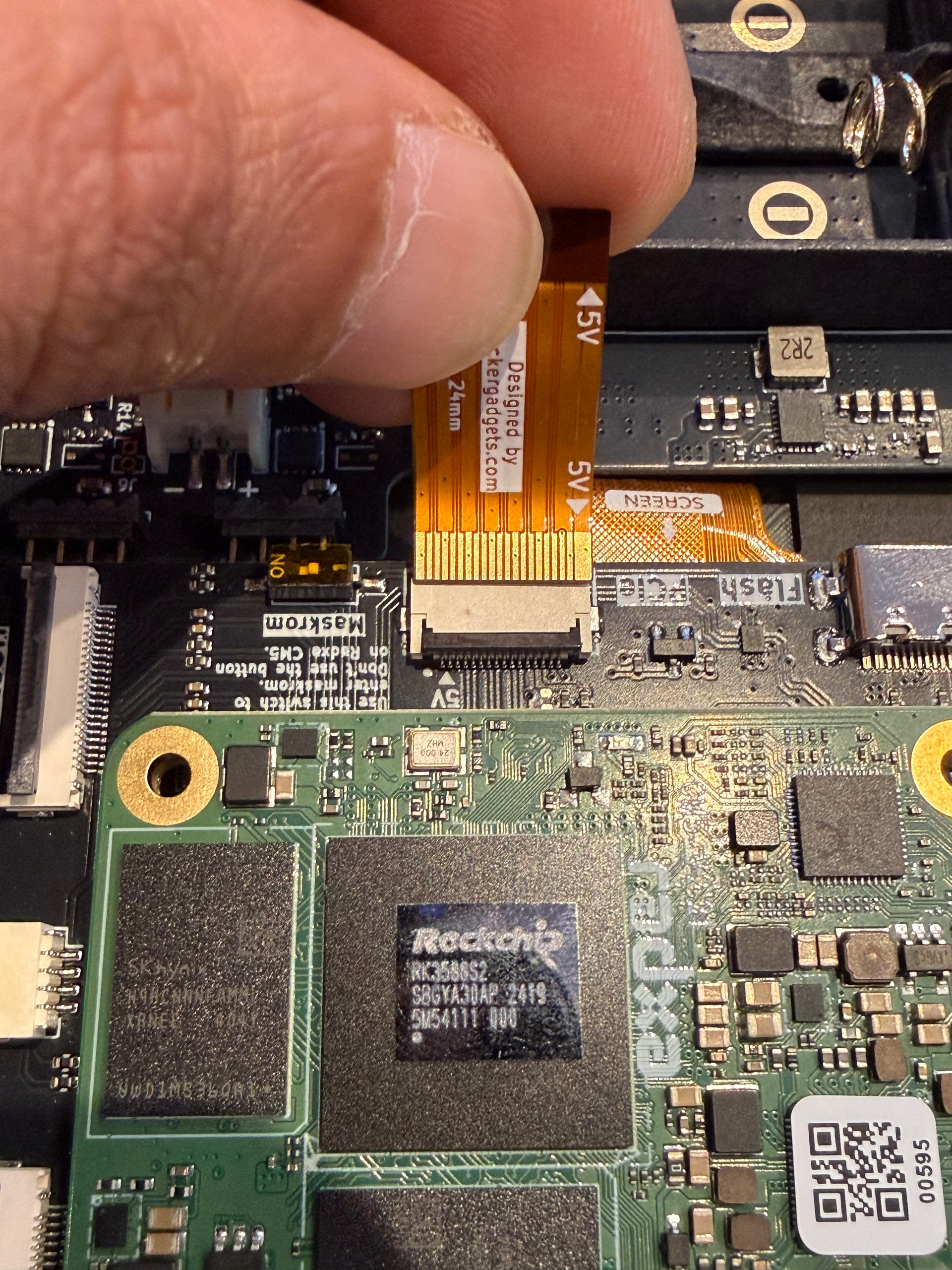
Shall I just cut it?…
isn’t that the USB ribbon cable?
Also the 5v marking on the cable should match the 5v marking on the pcb
Well… I can confirm that I have officially fucked it up completely…
I’m not in the mood to explain how it happened… I’ll tell you guys later…
Have a nice day…


3 Likes
Dam I feel for you bro those ain’t cheap either I have got the 8gb GPU version which I am building soon. I just build my second Uconsole with hackerGadgets kit today. Just have one more to build the radxa CM5 then I am ready to review a new video soon

1 Like
did you notice any stability issues after using NVME + CM5? Mine seem to struggling with voltages & power supply when using lipo. I am experiencing black screens or sometime random shut downs, I have tried clock down the CM5, it helps a bit but not completely solving the issue.
Afaik you can only use the “optimized for low power” ones, for example the raspberry pi official ssd, and yet it still generates a high load on the power system.